
Opinion: Decarbonizing Housing Isn’t a Burden. It’s an Investment — But There are Challenges
The good news? We have the technology - and, since 2022, heat pump sales exceed furnace sales in B.C. The challenge? Financing: costs are a steep hill for strata councils and rental owners.
Last July, I stood in a stuffy hallway of a 1970s walk-up in East Vancouver. The building manager had just installed portable air-conditioning units in two suites — an emergency measure after a tenant fainted during a heat wave.
“We need a real solution,” she said. “But we can’t afford it.”
That moment stuck with me. It’s a story repeated across B.C.’s low-rise multi-family buildings, where aging infrastructure meets rising temperatures.
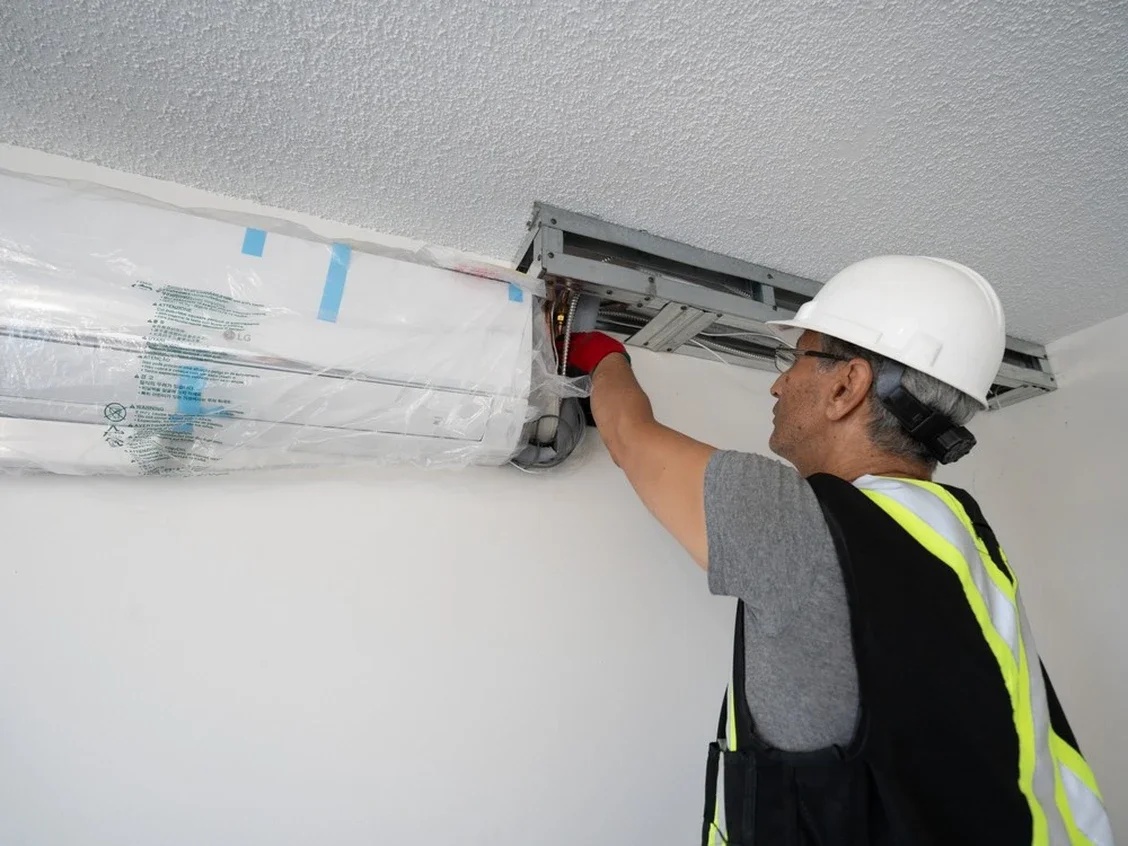
Heat pumps are efficient, clean, and increasingly affordable. They cool in summer, heat in winter, and lead to reduced indoor air pollution. But retrofitting a 40-unit building can cost over $1 million, depending on the system type and electrical upgrades required. Even with rebates, that’s a steep hill for strata councils and rental owners.
That’s where Affine Climate Solutions comes in.
We’re currently leading more than 20 deep retrofit projects across B.C., helping apartment buildings cut their carbon emissions by over 90 per cent. Our upgrades include heat pumps, insulation, ventilation, and hot water systems.
These improvements don’t just reduce carbon — they save money. Building owners are seeing average energy savings of about $500 per unit per year, thanks to the efficiency of heat pumps and lower operating costs. We support owners through every step, from design to financing, making it easier to modernize and improve comfort for residents.
To scale this work, we launched the Banking on Buildings Program — a national initiative to transform how financial institutions evaluate and finance green buildings.
The program focused first on new construction, now running pilots across commercial and multi-family buildings. This fall, we're expanding into retrofit financing, working with policy- makers and lenders to help older buildings access the capital they need to become low-carbon and climate resilient.
Here's the idea: If banks recognize that climate-aligned buildings are higher value and lower- risk, they can offer better loan terms. That means lower interest rates, faster approvals, and more accessible financing for retrofits. We're working with major lenders like BMO, BDC, Vancity Credit Union, and Coast Capital Savings to make this happen.
Canada has over 16 million homes and half a million other buildings, most of which will still be standing in 2050. Yet less than five per cent of these buildings are low-carbon or climate resilient, and only a fraction meet net-zero standards.
Retrofitting isn't just a climate imperative — it's a public health and affordability issue.
Low-carbon buildings use less energy, cost less to operate, and are safer during extreme weather. They also hold their value better, with lower operating costs, occupancy rates, and resale prices.
We're calling on governments to support capital relief for climate-aligned buildings — a simple policy change that would allow banks to hold less capital against lower-risk green loans and mortgages and pass on better loan terms for low-carbon retrofits.
It's a practical fix that could unlock billions in financing.
We're also inviting building owners and lenders to step up. Let's make heat pumps and deep retrofits the new standard in B.C.'s apartment buildings — not the exception.
Because decarbonizing housing isn't a burden, it's an investment. One that pays off in lower energy bills, healthier indoor air, safer communities, and more affordable living.
Because no one should have to choose between staying cool and staying safe.

Understanding the Language of Climate-Aligned Real Estate
We have developed a practical guide to help stakeholders in sustainable finance and real estate decode common terminology.
The world of sustainability and real estate is filled with technical terminology that can be daunting, even for professionals. Terms like “net-zero”, “decarbonization”, and “climate resilience” are widely used, but what do they mean in the context of financial institutions, developers, and policymakers?
At Affine Climate Solutions, we believe that clarity in language leads to clarity in action. This guide breaks down the most essential terms shaping the industry, providing a reference point for stakeholders looking to align with the future of sustainable finance.
Carbon and Emissions Focus
Climate-Aligned:
A process of aligning economic activities with global 1.5°C climate targets. Used in finance, investment, and real estate to indicate proactive climate action rather than incremental emission reductions or carbon offsetting.
Climate-aligned real estate refers to buildings that are prepared for tomorrow’s climate realities. A climate-aligned building is low-carbon across its life cycle – meaning it tackles operational and embodied emissions – and it’s resilient to physical climate risks like flooding or extreme heat. In other words, it’s designed to perform under future conditions, not just current codes.
Why it Matters: Climate risk is now credit risk. Properties that can withstand shocks and maintain stable net operating income are less likely to default and more likely to retain value. That’s the business case: climate alignment isn’t a marketing label; it’s a risk management strategy that protects portfolios and creates opportunity for sustainable growth.
Decarbonization:
The reduction or elimination of CO₂ and other greenhouse gas emissions, typically through energy efficiency measures, renewable energy adoption, electrification, and operational shifts.
Why it Matters: According to the United Nations Environment Program’s report Building Materials and the Climate: Constructing a New Future, the buildings and construction sector is the largest emitter of greenhouse gases, contributing nearly 40% of global emissions, making it a critical focus area for meaningful climate action.
Net-Zero (Emissions)
Achieving a balance between greenhouse gases produced and those removed or offset.
Why it Matters: Financial institutions, governments, and corporations continue to make net-zero commitments to align with international climate goals and economic opportunities, creating a shift in lending, underwriting, and investment practices.
Resilience and Adaptation
Climate Recovery
A forward-looking approach to not only reducing emissions but actively restoring ecosystems and reversing environmental damage.
Why it Matters: Some corporations, governments, and non-profits are moving beyond “do less harm” models toward regenerative investments that contribute positively to the environment.
Climate Resilience
The ability of buildings, infrastructure, and financial systems to withstand and adapt to climate-related risks such as extreme weather events, rising sea levels, and changing regulations.
Why it Matters: Climate-resilient assets are prepared for tomorrow’s climate realities and pose lower physical and financial risks for owners, tenants, investors and lenders, making them more stable and attractive.
Sustainability and Circularity
Circular Economy
A system where materials and resources are kept in use for as long as possible, minimizing waste and maximizing efficiency.
Why it Matters: The real estate sector is shifting toward circular economy principles, prioritizing adaptive reuse, sustainable materials, and lifecycle carbon reduction.
Regenerative Design
Going beyond sustainability by actively improving environmental and social systems through design, planning, and material selection.
Why it Matters: Real estate projects that embrace regenerative design are better positioned for long-term value retention and occupant well-being.
Sustainability in Real Estate
Sustainability is generally defined as meeting present needs without compromising the ability of future generations to meet theirs. It is a broad term that encompasses economic, environmental, and social responsibility.
Sustainable Real Estate is a building or portfolio planned, financed, delivered, and operated to minimize whole-life environmental impacts, strengthen social outcomes for occupants and communities, and maintain resilient, transparent governance—while preserving or enhancing long‑term financial value.
Why it Matters: Sustainability is not an add-on; it’s a core driver of asset value and loan performance through supply and demand, obsolescence, and risk reduction.
Strategy Terminology for Real Estate
Climate Strategy
An organization-wide framework that guides how real estate assets and portfolios are planned, financed, delivered, and operated in response to climate risk and opportunity. It integrates emissions reductions, climate resilience, and sustainability to protect long-term asset value, portfolio performance, and organizational objectives.
Decarbonization Strategy
A targeted, actionable approach for reducing greenhouse gas emissions across real estate portfolios, covering design standards, capital planning, construction practices, operations, and asset management. It aligns technical pathways with governance, funding, and delivery processes to drive measurable emissions reductions.
Net Zero Strategy
A portfolio-level roadmap that sets targets, timelines, and implementation pathways to eliminate operational and embodied carbon in real estate assets over time, while strengthening resilience to future climate conditions. It connects building-level actions with organizational strategy, investment decisions, and long-term portfolio planning.
Final Thoughts: Clarity Drives Action
In the rapidly evolving landscape of sustainability and climate risk in real estate, understanding these terms is more than semantics – it’s a practical necessity. At Affine, we believe insight is only the beginning. Turning insight and intention into action is where real impact happens.
Our team is committed to helping real estate owners and financial institutions lead the transition to climate-aligned portfolios. Because decarbonization isn’t just a climate imperative, it’s a strategic business advantage. Our work – including initiatives like the Banking on Buildings Program – demonstrates the business case for climate-aligned real estate and lending strategies.