Opinion: Decarbonizing Housing Isn’t a Burden. It’s an Investment — But There are Challenges
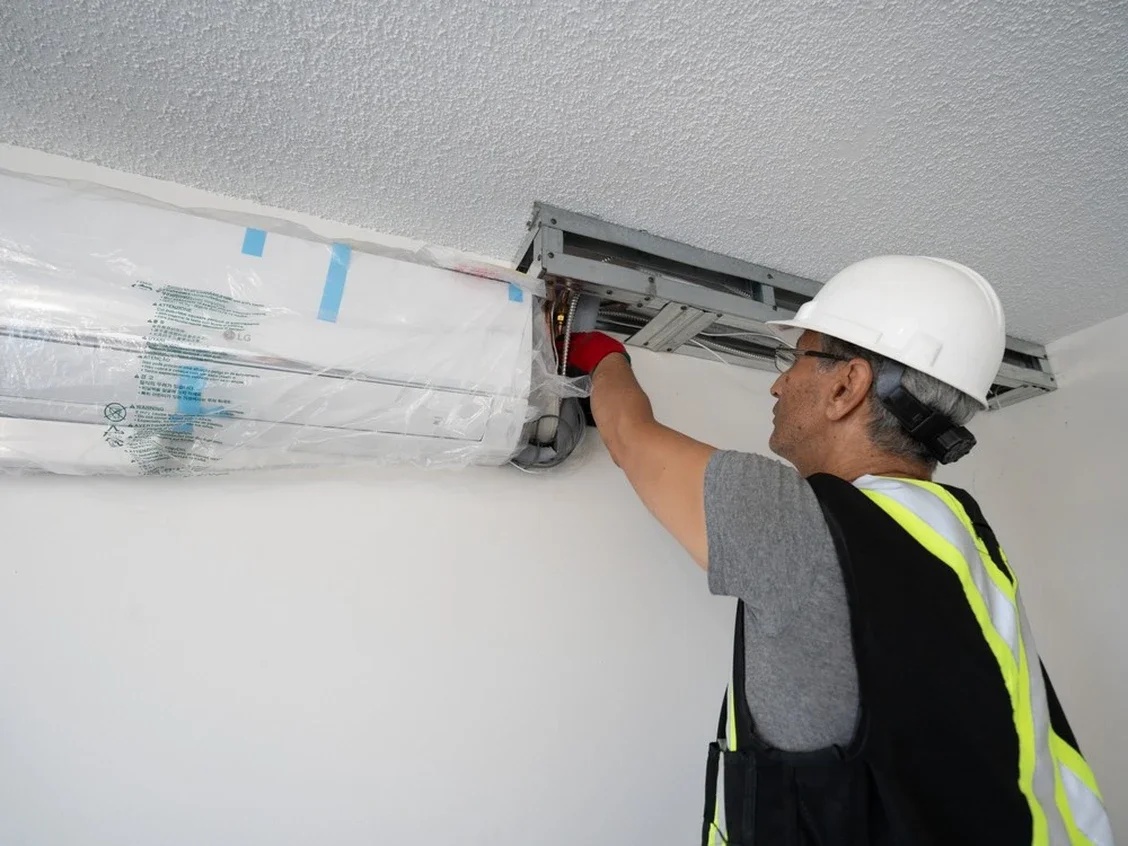
Last July, I stood in a stuffy hallway of a 1970s walk-up in East Vancouver. The building manager had just installed portable air-conditioning units in two suites — an emergency measure after a tenant fainted during a heat wave.
“We need a real solution,” she said. “But we can’t afford it.”
That moment stuck with me. It’s a story repeated across B.C.’s low-rise multi-family buildings, where aging infrastructure meets rising temperatures.
Heat pumps are efficient, clean, and increasingly affordable. They cool in summer, heat in winter, and lead to reduced indoor air pollution. But retrofitting a 40-unit building can cost over $1 million, depending on the system type and electrical upgrades required. Even with rebates, that’s a steep hill for strata councils and rental owners.
That’s where Affine Climate Solutions comes in.
We’re currently leading more than 20 deep retrofit projects across B.C., helping apartment buildings cut their carbon emissions by over 90 per cent. Our upgrades include heat pumps, insulation, ventilation, and hot water systems.
These improvements don’t just reduce carbon — they save money. Building owners are seeing average energy savings of about $500 per unit per year, thanks to the efficiency of heat pumps and lower operating costs. We support owners through every step, from design to financing, making it easier to modernize and improve comfort for residents.
To scale this work, we launched the Banking on Buildings Program — a national initiative to transform how financial institutions evaluate and finance green buildings.
The program focused first on new construction, now running pilots across commercial and multi-family buildings. This fall, we're expanding into retrofit financing, working with policy- makers and lenders to help older buildings access the capital they need to become low-carbon and climate resilient.
Here's the idea: If banks recognize that climate-aligned buildings are higher value and lower- risk, they can offer better loan terms. That means lower interest rates, faster approvals, and more accessible financing for retrofits. We're working with major lenders like BMO, BDC, Vancity Credit Union, and Coast Capital Savings to make this happen.
Canada has over 16 million homes and half a million other buildings, most of which will still be standing in 2050. Yet less than five per cent of these buildings are low-carbon or climate resilient, and only a fraction meet net-zero standards.
Retrofitting isn't just a climate imperative — it's a public health and affordability issue.
Low-carbon buildings use less energy, cost less to operate, and are safer during extreme weather. They also hold their value better, with lower operating costs, occupancy rates, and resale prices.
We're calling on governments to support capital relief for climate-aligned buildings — a simple policy change that would allow banks to hold less capital against lower-risk green loans and mortgages and pass on better loan terms for low-carbon retrofits.
It's a practical fix that could unlock billions in financing.
We're also inviting building owners and lenders to step up. Let's make heat pumps and deep retrofits the new standard in B.C.'s apartment buildings — not the exception.
Because decarbonizing housing isn't a burden, it's an investment. One that pays off in lower energy bills, healthier indoor air, safer communities, and more affordable living.
Because no one should have to choose between staying cool and staying safe.