Designing for Net Zero: Lessons from the Squamish Nation’s Chief Joe Mathias Centre
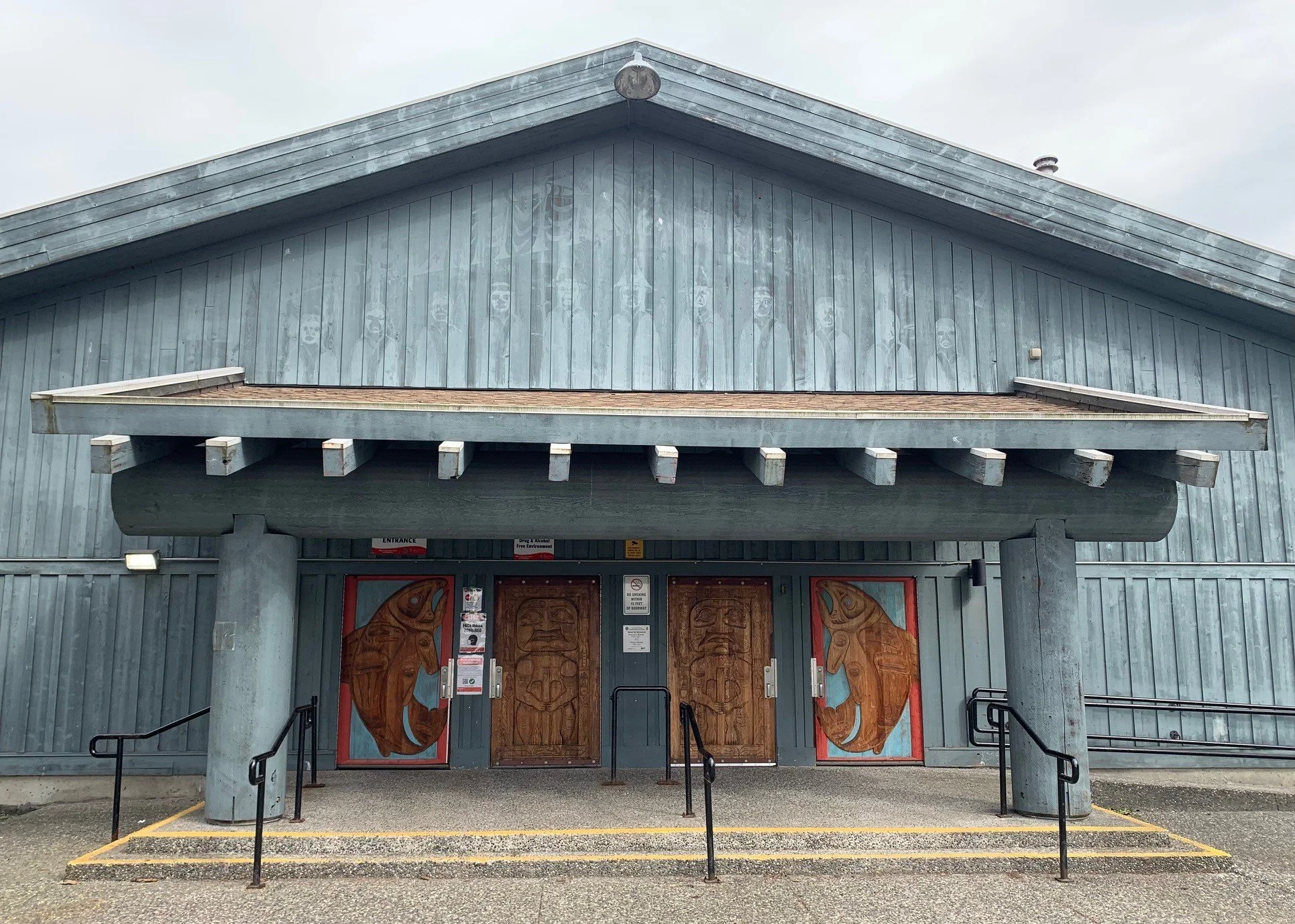
Across Canada, many communities are grappling with the same challenge: how to meaningfully decarbonize existing buildings without compromising affordability or community function. This challenge is often paired with a deeper responsibility – to align climate action with long-term stewardship, resilience, and care for community members across generations.
The Chief Joe Mathias Centre (CJMC), a cultural and recreational hub for the Squamish Nation offers a powerful example of how this can be done. Built in the early 1990s, the Centre supports year-round programming, community gatherings, and essential services. With major mechanical systems reaching the end of their useful life, the building became an ideal candidate to test what a credible, net-zero-aligned retrofit could look like in practice.
Testing Full Electrification in a Real-World Setting
Rather than defaulting to conventional equipment replacement, the Squamish Nation chose to use this opportunity to pilot an approach that could inform future retrofit decisions across its building portfolio. The objective was not only to reduce emissions, but to understand the technical feasibility, financial implications, and long-term value of moving away from fossil fuels entirely.
One of the most significant questions explored through the project was whether a fully electric retrofit could realistically meet the needs of a complex, high-use community facility. Hybrid systems that retain natural gas for peak heating are often perceived as a safer or more economical option. Through detailed energy modelling and schematic design, however, the project demonstrated that a fully electric solution could meet heating, cooling, and domestic hot water demands without a prohibitive cost premium, while avoiding the long-term emissions and transition risks associated with gas infrastructure.
Long-Term Value, Health, and Resilience
The retrofit strategy focused on electrifying HVAC systems, domestic hot water, and commercial kitchen equipment, supported by rooftop solar photovoltaics. Together, these measures were projected to reduce greenhouse gas emissions by approximately 87%. Importantly, the project explored less common retrofit components, such as fully electrified commercial kitchen equipment, helping to test market readiness and identify supply limitations that are often overlooked in early planning.
Beyond emissions, the project highlights the broader benefits of deep retrofits when evaluated through a long-term lens. A Total Cost of Ownership (TCO) analysis compared like-for-like equipment replacement with a deep electrification pathway over a 60-year post-retrofit lifespan. While the electrified option required higher upfront capital investment, the analysis showed that lower energy costs, improved system efficiency, and avoided exposure to natural gas price escalation could offset those costs over time. In other words, the “cheapest” option upfront was not the most cost-effective option over the life of the building.
From Pilot Project to Portfolio Learning
Health and resilience were equally central to the project’s design. Eliminating gas-fired kitchen equipment improves indoor air quality, reducing exposure to pollutants for staff, elders, children, and other vulnerable community members. New ventilation and filtration systems further protect indoor environments during wildfire smoke events – an increasingly common climate impact in B.C.
The project reframed the Centre’s role during extreme weather. Post-retrofit, CJMC is envisioned as a community resilience hub, capable of providing safe, climate-controlled space during heat waves, cold snaps, and emergencies. While a battery storage system was investigated, cost and duration constraints led the team to pursue alternative backup power solutions, with an emphasis on lower-emission fuel options. This transparent evaluation process is itself an important outcome, offering practical insight into where current technologies succeed and where further innovation is needed.
Perhaps most importantly, the CJMC retrofit demonstrates the value of using pilot projects as learning platforms. The goal was not to create a one-off success, but to test assumptions, build internal capacity, and develop replicable processes that can support future decarbonization efforts across the Nation’s building stock.
As more communities face decisions about aging infrastructure and climate commitments, projects like the Chief Joe Mathias Centre illustrate what becomes possible when retrofit planning is guided by long-term value and community priorities.