Beyond Carbon: Why Mass Timber Is Gaining Ground in B.C. Construction
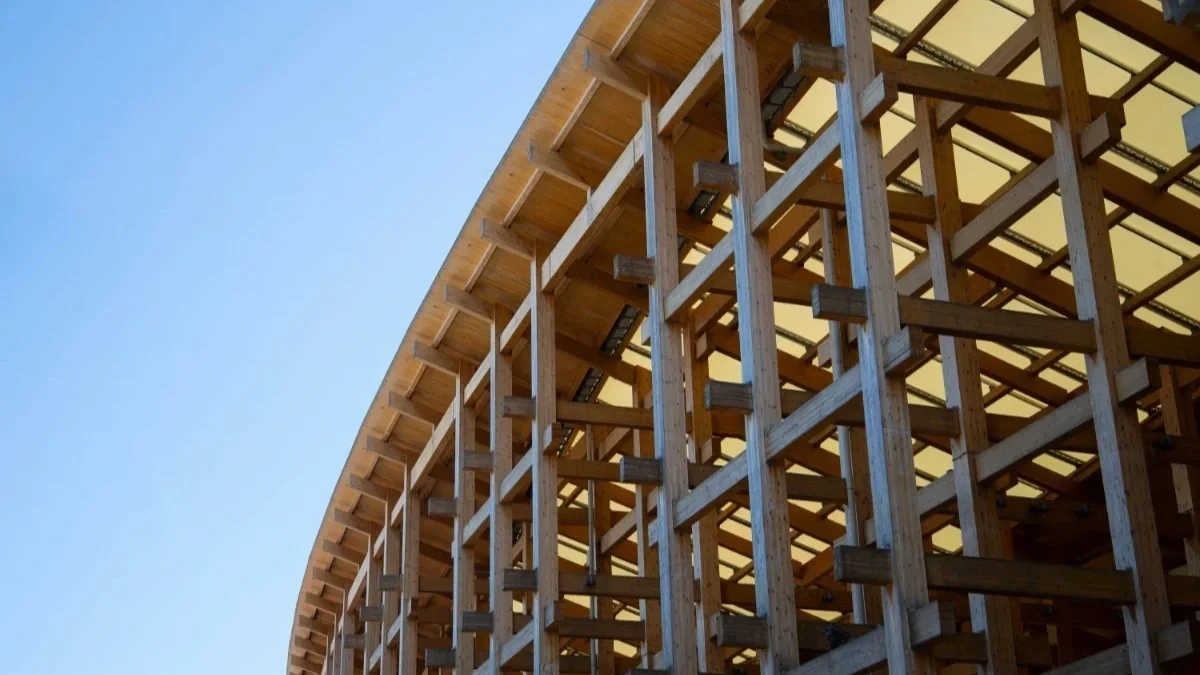
Mass timber is moving from niche to mainstream in British Columbia and other Canadian provinces. Years of coordinated effort by governments, industry, Indigenous partners, and post-secondary institutions have grown local manufacturing capacity, strengthened workforce skills, and increased market confidence. The result: as of December 2023, there were 370 mass timber buildings in B.C., according to the Government of B.C.’s Mass Timber Action Plan Progress Update. A2024 BC Building Code revision raised the height limit for encapsulated mass timber construction from 12 to 18 storeys, further encouraging uptake.
Supported by BC Forestry Innovation Investment’s (FII) Wood First Program, Affine Climate Solutions developed a Total Cost of Ownership (TCO) methodology comparing mass timber with conventional construction materials across nine decision factors.
Beyond Carbon: Housing and Delivery Benefits
Beyond its climate benefits, mass timber offers a compelling opportunity to address housing supply challenges. Prefabricated and modular approaches can shorten construction schedules and reduce site disruption. Recent theoretical costing studies suggest mass timber can be competitive with concrete and steel under the right conditions – but upfront construction costs tell only part of the story.
Our report highlights why TCO matters when deciding whether to incorporate mass timber and other emerging materials and technologies into construction projects. While upfront costs for mass timber can still be higher – and insurance, financing, and procurement risks remain a factor – TCO analysis provides a more complete picture of long-term costs and benefits. When operational performance, occupant wellbeing, embodied carbon, schedule impacts, and long-term asset value are considered together, mass timber’s advantages become clearer.
From Case Study to Market Insight
Using a hybrid mass timber affordable housing project under construction in Vancouver as a case study, we compared nine decision factors across mass timber, concrete, and steel systems. Applying real project data to a modeled pro formaallowed us to test assumptions and surface trade-offs across upfront capital costs, lifecycle costs and performance, environmental outcomes, and occupant benefits. While modeled comparisons have limitations – costs fluctuate over time, making accurate projections a challenge – the approach offers a comprehensive framework for informed decision-making.
The takeaway is not that mass timber is always the lowest-cost option today, but that its risk profile is improving. At the same time, mass timber provides significant embodied carbon reductions and end-of-life benefits through reuse, repurposing, and biodegradability. As supply chains mature and more projects reach completion, costs are expected to decline and insurance and financing barriers to reduce. As a locally sourced material, mass timber strengthens regional economies and reduces exposure to global supply chain volatility.
For owners and developers considering mass timber, early and integrated decision-making is critical. Engaging insurers and financiers upfront, selecting experienced design and construction teams, and considering alternative delivery models can significantly improve outcomes. Equally important is starting with mass timber as a primary design intent – rather than treating it as a late-stage substitution – so its schedule and carbon benefits can be fully realized.
Mass timber is not just a construction choice. In many cases, it can be a strategic investment in climate-aligned housing and long-term asset performance.