Comparing Net Zero Retrofit and New Construction Pathways in False Creek South
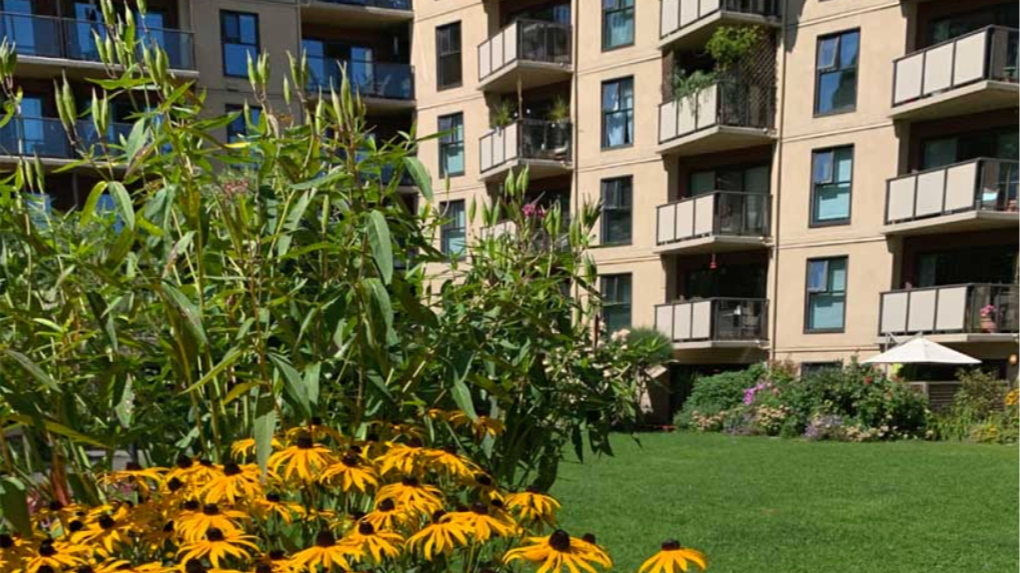
As cities grapple with aging buildings, climate commitments, and affordable housing shortages, the question of whether to retrofit or redevelop is becoming central to urban planning. For False Creek South - a Vancouver neighbourhood where two-thirds of homes are non-profit or co-operative - the answer carries long-term implications for carbon emissions, affordability, and housing availability.
Affine Climate Solutions was selected by the False Creek South Neighbourhood Association (FCSNA) and its RePlan committee to complete a study comparing two pathways for Creekview Housing Co-operative: a net-zero, climate-resilient retrofit, or complete redevelopment with new affordable and market units. Amid upcoming lease expiries and accumulating deferred maintenance across many homes in False Creek South, the Creekview case study offered a critical opportunity to assess the environmental and financial impacts of each option.
Comparing Retrofit and Redevelopment Pathways
Our analysis evaluated five key drivers: density, capital costs, affordability, livability, and carbon (both operational and embodied). The findings showed that retrofitting existing buildings can deliver lower emissions and greater affordability than new construction.
Over a 45-year horizon, the retrofit scenario was projected to generate 92% less carbon than redevelopment, with embodied carbon accounting for most emissions in both scenarios. Lifetime costs were also considerably lower, with the retrofit scenario projected to cost 90% less than redevelopment. While redevelopment could increase the number of housing units by approximately 80%, it would likely be financially unviable to maintain the current level of deep affordability.
From Comparison to Informed Choice
To fully inform future planning, additional work could strengthen the comparison, including a detailed pro forma for new construction, refined upgrade scopes for a retrofit scenario, and a deeper evaluation of community and social impacts.
For Affine, this project reflects the kind of integrated, evidence-based analysis we bring to housing providers, governments, and real estate developers. By combining carbon modelling, cost analysis, livability considerations, and climate-aligned financing insights, we help clients navigate complex decisions that balance environmental performance with long-term social value.